
Step 5 of 5 · Retention
Retention: how to keep subscribers engaged, grow their value and reduce churn
Acquiring a subscriber is only half the job. Every subscriber who leaves has to be replaced before your subscriber base can grow, and replacing them usually costs more than keeping them. Yet retention often gets a fraction of the attention that goes into paywalls and acquisition campaigns.
Retention isn't one moment. It's everything that happens between the end of onboarding and the renewal date: keeping subscribers engaged, spotting those who are drifting away, offering more to those who want more, and, when someone does decide to leave, giving them a cancellation journey that respects their choice while still giving them reasons to stay. This article looks at what publishers have learned at each of these steps, and how to build them with Poool.
Retention starts long before the cancellation button
1. Engagement is what keeps subscribers
- Amedia: monthly churn is 3–4% for subscribers who read daily, vs 7–12% for those who read every three days or less.
- Der Spiegel: only 7% of subscribers score below 20 on its engagement score, yet that group accounts for 40% of cancellations.
- Financial Times: app users are 37% less likely to cancel than non-app users.
- Mather Economics: subscribers who keep two or more habits churn 50% less than those with only one.
2. Adding value beats cutting prices
- NRC: when it gave every subscriber unlimited New York Times access, more than half activated it and cancellations fell across all subscription types.
- El País: subscribers who use its loyalty scheme churn 30% less.
- The Times: churn among users of its “bonus accounts” (formalised sharing) has stayed below 0.01%.
- INMA: 26 of the top 50 news subscription brands offer only one digital product, which leaves little room to upsell their most engaged readers.
3. Some churn is avoidable: failed payments
- Roughly 30% of media subscription cancellations come from failed payments. The Washington Post cut much of this by prompting card updates inside the reading experience rather than by email.
4. A good cancellation journey saves subscribers
- Aftenposten: after it simplified its cancellation flow, subscribers retained through the flow rose from about 600 to almost 900 a month.
- Madsack: its flow answers each cancellation reason with a tailored argument and offer. It saved 4,281 cancellations in 2025.
- Libération: about half of the subscribers trying to cancel stay when offered a price cut. They prefer a €36 saving to two free months.
- The EU's proposed Digital Fairness Act would require a prominent “terminate contract here” button and ban disproportionately long cancellation flows.
Building this with Poool
1. Keep reminding subscribers why they subscribed
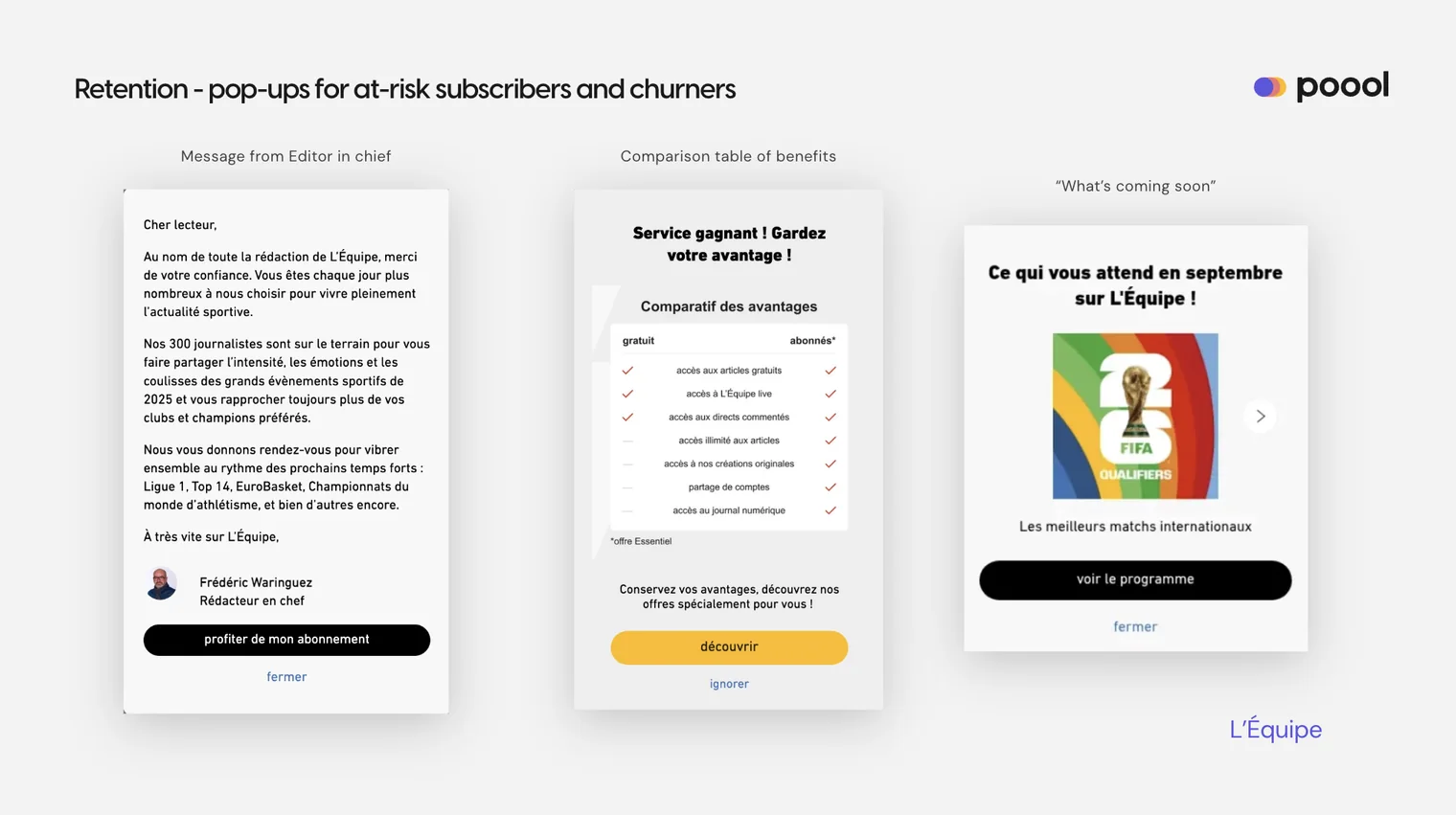
Subscribers who don't use what they pay for are the first to leave. Keep the value of the subscription visible: a personal message from the editor-in-chief, a reminder of the benefits that come with the subscription, a preview of the big moments coming up. L'Équipe does all three with pop-ups for at-risk subscribers and churners: a letter signed by its editor-in-chief, a comparison of what free readers and subscribers get, and a "what's coming in September" message announcing the biggest matches ahead.
With Poool, you can build retention and anti-churn journeys for your subscribers, on the web and in your app, and target them by status, engagement or your own data. At L'Équipe, subscribers who saw at least one Poool retention widget had 84% retention after two months, vs 63% for those who saw none.
2. Spot at-risk subscribers before they cancel
Most cancellations are preceded by warning signs: fewer visits, the end of an introductory offer, an upcoming price increase, a card about to expire. Act on them early, while the subscriber is still reading: bring back the stories they've missed, the newsletter that matches their interests, the benefits they haven't used. For loyal subscribers, do the opposite: Hearst found its most loyal readers prefer fewer messages, so cap how often they see you.
With Poool, you can target journeys by visits, articles read or your own variables, including the segments and scores from your CDP, and cap how often each subscriber sees a message. Your models stay yours: Poool activates them.
3. Grow the value of each subscriber
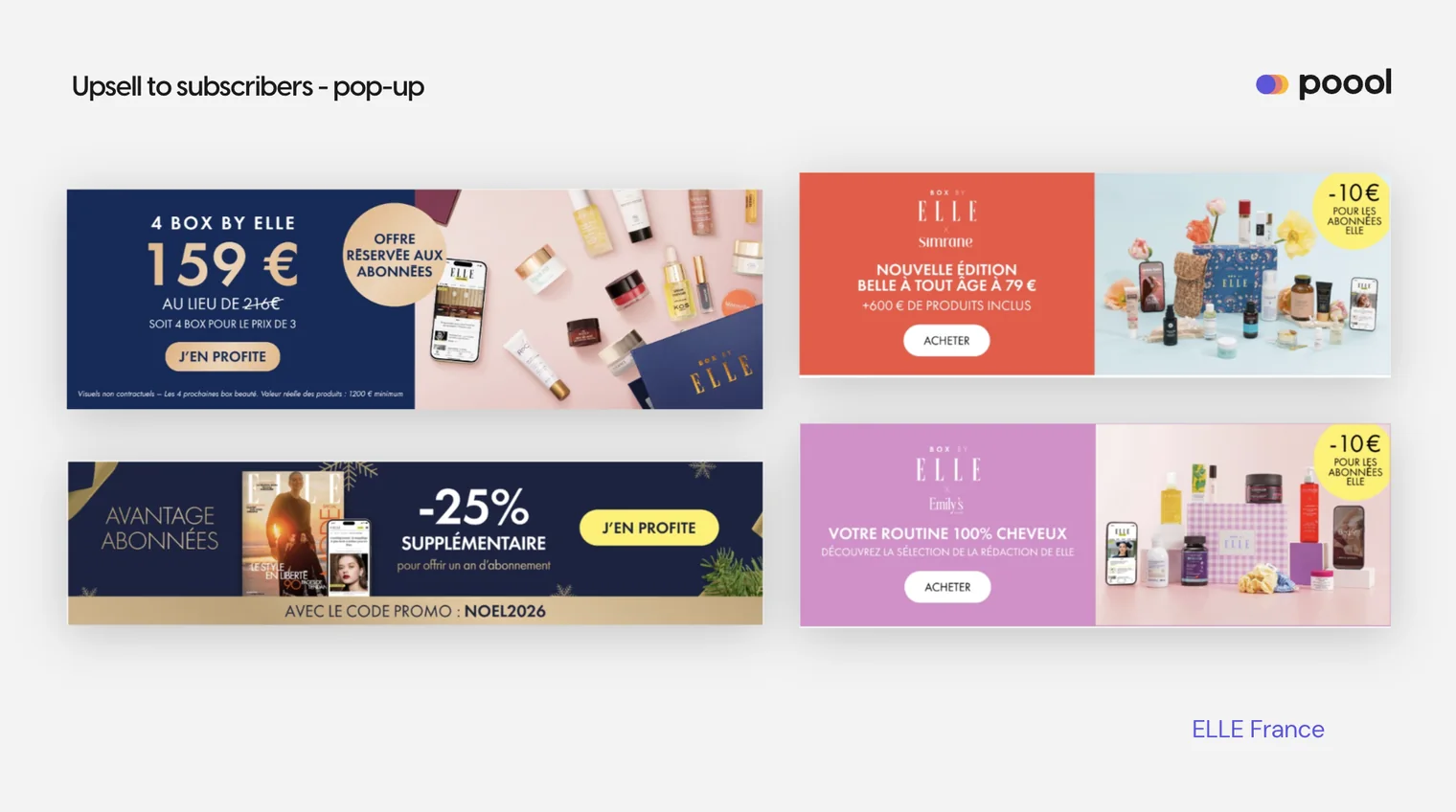
Your most engaged subscribers are also the most likely to want more: a higher tier, a bundle, a gift subscription for someone else, or products and services linked to your brand. ELLE France, for example, shows its subscribers offers reserved for them: Box by ELLE beauty boxes at a subscriber price, and an extra discount to give a year's subscription as a gift. And for subscribers who share their login, a family or duo offer can turn account sharing into revenue.
With Poool, you can show different offers and prices to different readers, and run reader journeys adapted to bundled offers (several titles, games, recipes). Your subscription platform manages the offers; Poool shows the right one to each subscriber.
4. Build a cancellation journey that respects the reader
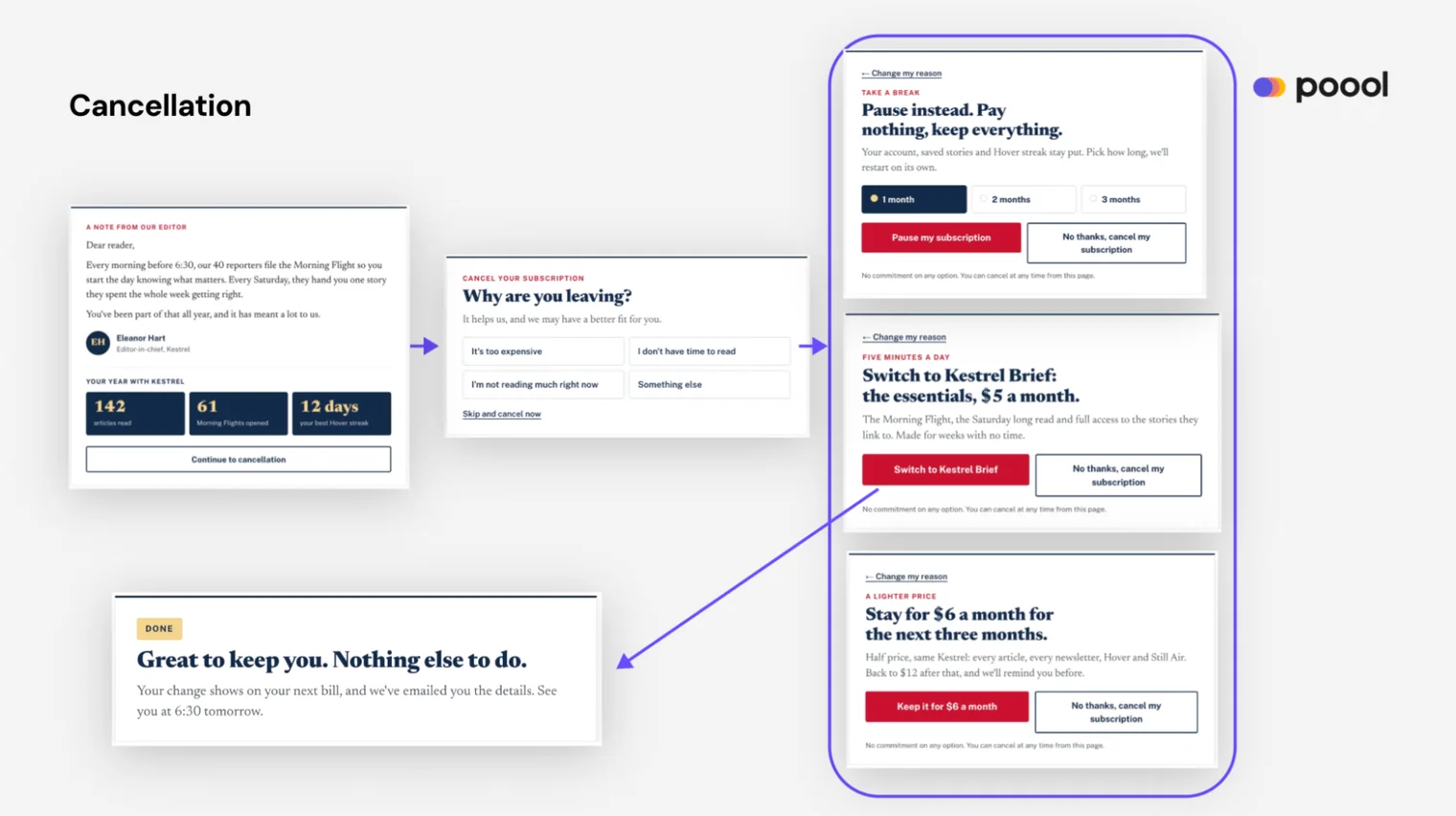
The best cancellation journeys in Audiencers' benchmark follow the same principles:
- Ask why first, then adapt. The Economist asks for the reason on the first screen, then shows a different next step for each answer: shorter formats for readers short of time, support for a technical problem, a discount for the others.
- Show what they'll lose, with their own data. The Financial Times shows saved articles the subscriber hasn't read yet; Slack lists exactly what the team will lose.
- Offer alternatives at the same level as cancelling. A pause, a cheaper plan or an annual plan paid monthly, as Netflix, Le Monde and DC Thomson do.
- Make any retention offer personal and precise: first name, discount, price before and after, renewal date.
- Keep it short, and keep the cancel option visible. A transparent journey builds trust, and readers who leave on good terms are easier to win back.
With Poool, you can build the cancellation flow as a multi-step journey: collect the reason, screens that adapt to each answer, and alternatives and offers before the final step. The answers go to your own systems. The cancellation itself stays in your subscription platform or customer portal.
5. Win back former subscribers
A cancellation isn't the end of the relationship. Former subscribers already know your journalism, and they're among the readers most likely to subscribe again. Reach them while they still have access, then again after, with a message and an offer adapted to how long they subscribed and how active they were.
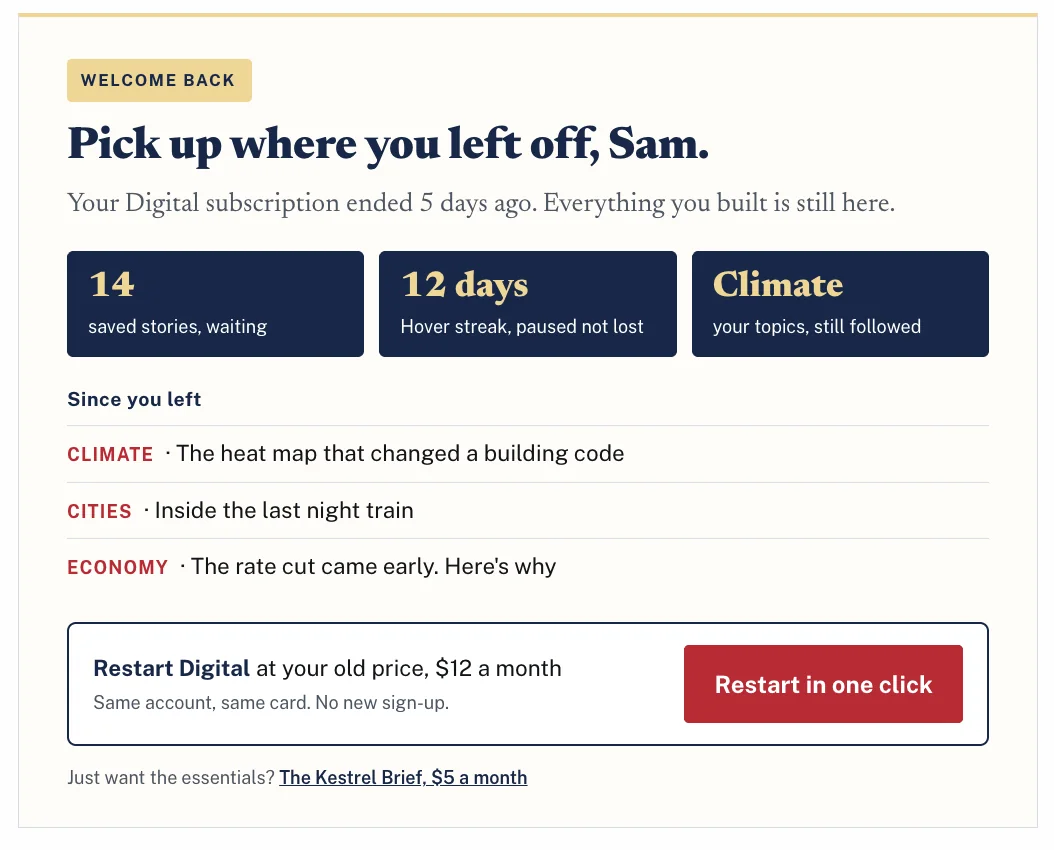
With Poool, you can run automated win-back campaigns, targeted to former subscribers on your site and in your app.
What publishers achieved with Poool
- At L'Équipe, subscribers who saw at least one Poool retention widget had 84% retention after two months, vs 63% for those who saw none.
- Using Poool, Le Parisien reduced churn by 60% on new subscribers with a personalised onboarding.
- The Kyiv Independent counts 27,000 paying members with a 1.64% monthly churn; many of its membership pushes run on Poool Engage.
Poool's MCP
Build your retention journeys in minutes
With Poool's MCP, you can build every one of these journeys from your own AI assistant, in minutes and without a developer. Share a Figma file, a URL or a screenshot, ask for a retention pop-up, an upsell offer or a cancellation flow, and it builds it based on what already works for publishers: 10 years of experience with 250+ publishers and Audiencers' analysis of 1,000+ more. Your team reviews, adjusts and decides what goes live.
Want to see what it would build for you? Book a demo to run your current retention journey through Poool's MCP.