
Step 1 of 5 · Newsletter sign-up
Newsletters: how to push sign-ups at every step of the reader journey
Search traffic is becoming less reliable every month. AI Overviews, ChatGPT and other answer engines now summarise the news before readers ever reach a publisher's site.
What's left is the reader who comes back by choice. For any reader revenue model, whether subscriptions, membership or donations, that reader is the business. And the most reliable way to bring them back, day after day, is a newsletter.
This article looks at why newsletters matter so much, then at how to push newsletter sign-ups at every step of the reader journey with Poool: in articles, banners, pop-ups and onboarding, targeted to what each reader is reading.
Newsletters build the habit that reader revenue depends on
Of the three metrics in RFV (Recency, Frequency, Volume), frequency is the one that matters most in the AI era, argues Viafoura CEO Mark Zohar on Audiencers. It measures habit and loyalty, it predicts lifetime value and how likely a reader is to register and to subscribe. As he puts it: "Frequency tells you whether you have a business."
A reader who lands on your site once a month from a search result is barely a reader. A reader who comes back a dozen times a month, because they want to, is a future registration, a future subscriber, and the kind of audience advertisers pay more to reach.
Newsletters are built for frequency. They arrive on a schedule, in a channel you own, and bring readers back without depending on search, social or AI platforms. Every sign-up is a reader asking to hear from you again, and the data shows what that habit is worth.
What the data says
- RND (Germany): subscribers who get its "5 in 5" morning newsletters stay 55% longer. Open rates are above 40%, across 76 titles with over 1 million subscribers.
- Financial Times: trial readers who sign up to a newsletter are 134% more likely to be retained.
- El País: subscribers who receive at least one of its 60+ subscriber-only newsletters churn 24% less than average.
- Mather Economics: subscribers who keep two or more habits (for example daily visits plus newsletter opens) churn 50% less than those with only one.
- The Washington Post: its churn model names newsletter engagement as a retention driver. Its most engaged subscribers are twice as likely to engage with newsletters.
- The Atlantic: joining a newsletter is one of three "First Best Actions" in week one, and its onboarding lifted retention by 4 percentage points.
Newsletters don't only keep subscribers. They also build the habit that leads to a subscription in the first place. At Broadsheet, which runs its registration wall and paywall on Poool, registered readers who also get the newsletter are just 0.7% of the audience, but drive 43% of subscription conversions.
One sign-up form in the footer isn't enough
Most publishers have a newsletter sign-up form. Far fewer put it in front of the right reader at the right moment. A first-time visitor from search, a regular reader halfway through an article and a new subscriber in their first week are all good newsletter prospects, but they need a different ask, in a different place.
The publishers who grow their newsletter base fastest push sign-up throughout the journey, and match each ask to the reader:
| Reader | Best moment | Format |
|---|---|---|
| First-time or occasional visitor | While browsing, without interrupting | Banner |
| Engaged reader | Mid-article, once they're invested | In-article module, matched to the topic |
| Loyal reader | After several visits or articles | Pop-up |
| New registered user or subscriber | In the first days and weeks | Onboarding journey |
1. Match the newsletter to what they're reading
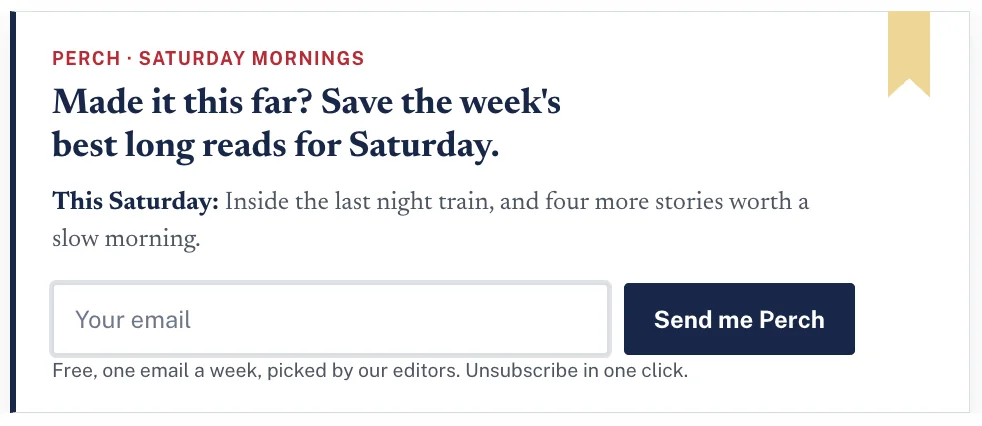
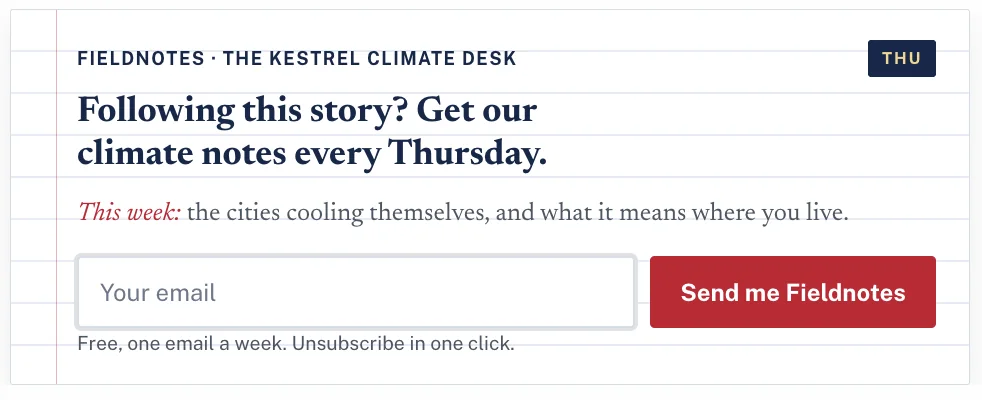
The strongest argument for a newsletter is the article the reader has just chosen. Someone reading about football is far more likely to sign up for a sports newsletter than for your general morning briefing. Offer the newsletter that matches the section, topic or content type, and say what they'll get and how often.
With Poool, every sign-up module can be targeted by content type, section, page, referrer or your own variables, so each reader sees the newsletter that fits what they're reading. You can also exclude readers who are already signed up.
2. In-article modules: ask when the reader is invested
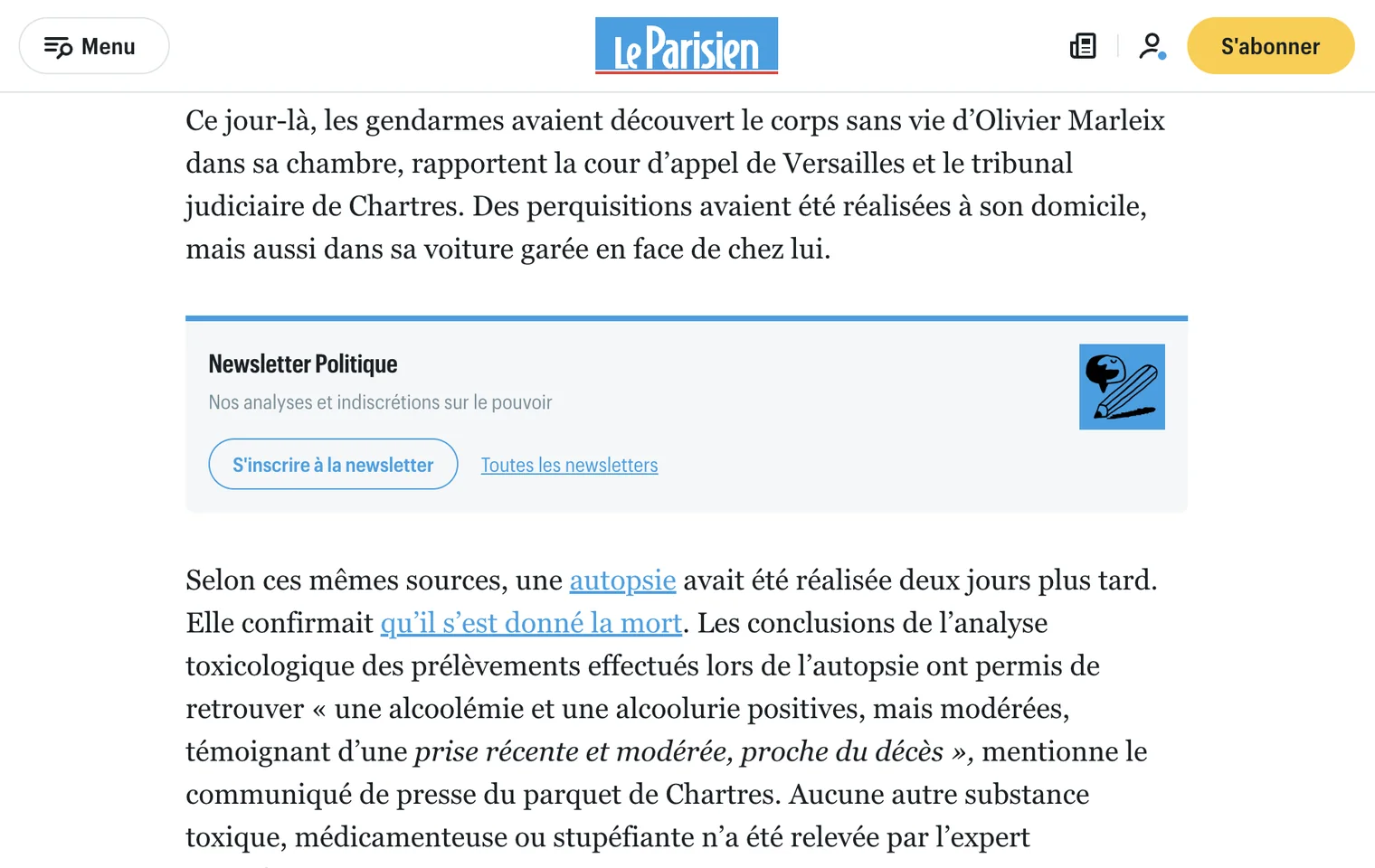
A module placed between paragraphs reaches readers at the moment they're most engaged with your content. Keep it light: one sentence on the benefit, one email field, one button. It should feel like part of the article, not an ad.
With Poool, you can trigger the module once the reader has scrolled far enough or spent enough time on the page, and design it to match your site, with no developer.
3. Banners: a low-friction ask for every visitor
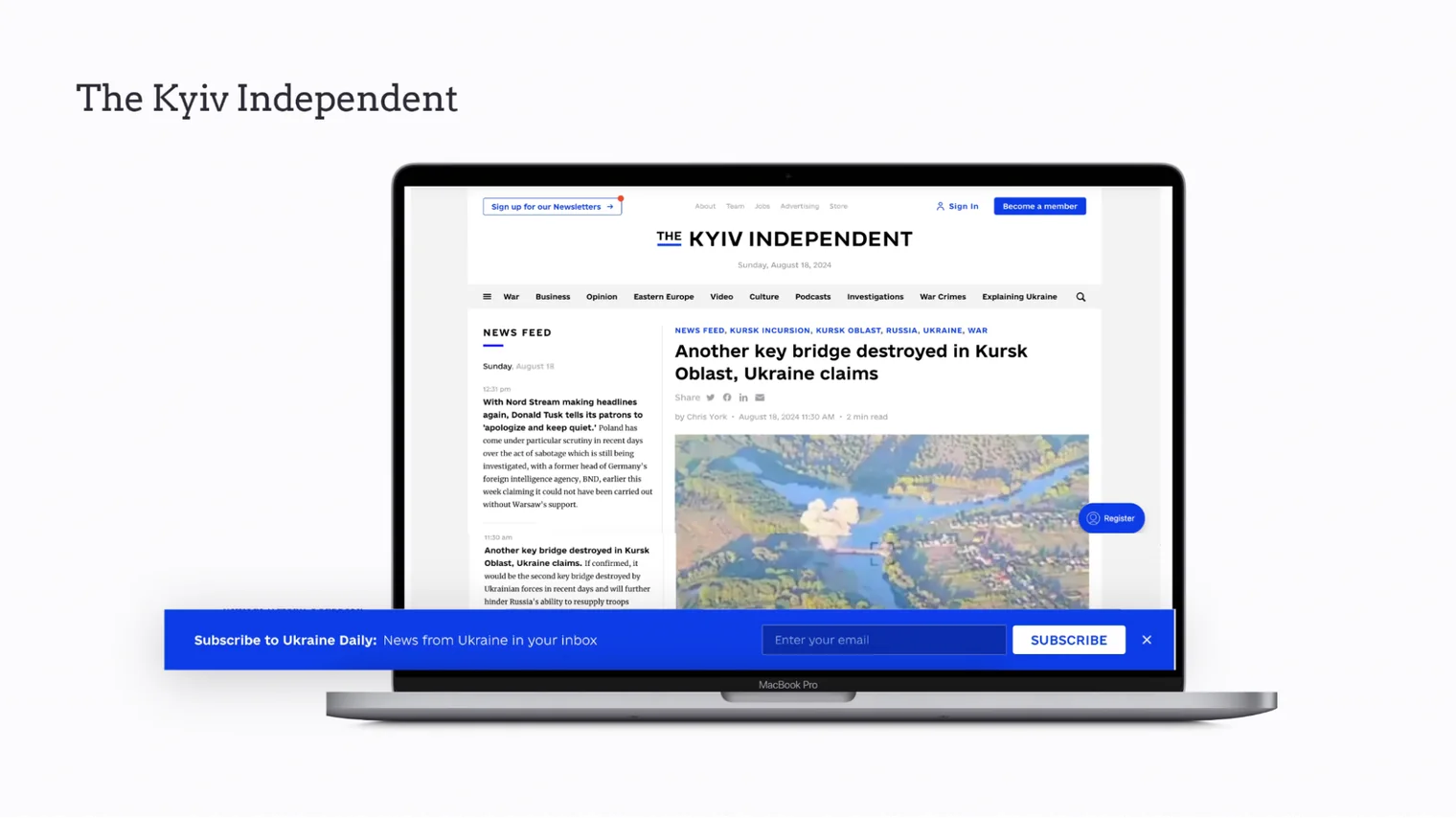
A banner (for example, a bar at the bottom of the screen) stays visible without interrupting reading. It's the right format for occasional readers who aren't ready for a stronger ask, and for promoting a specific newsletter or a new launch.
With Poool, you control where it appears, on which pages and how often, and you can pause or change it instantly.
4. Pop-ups: the strongest ask, used at the right moment
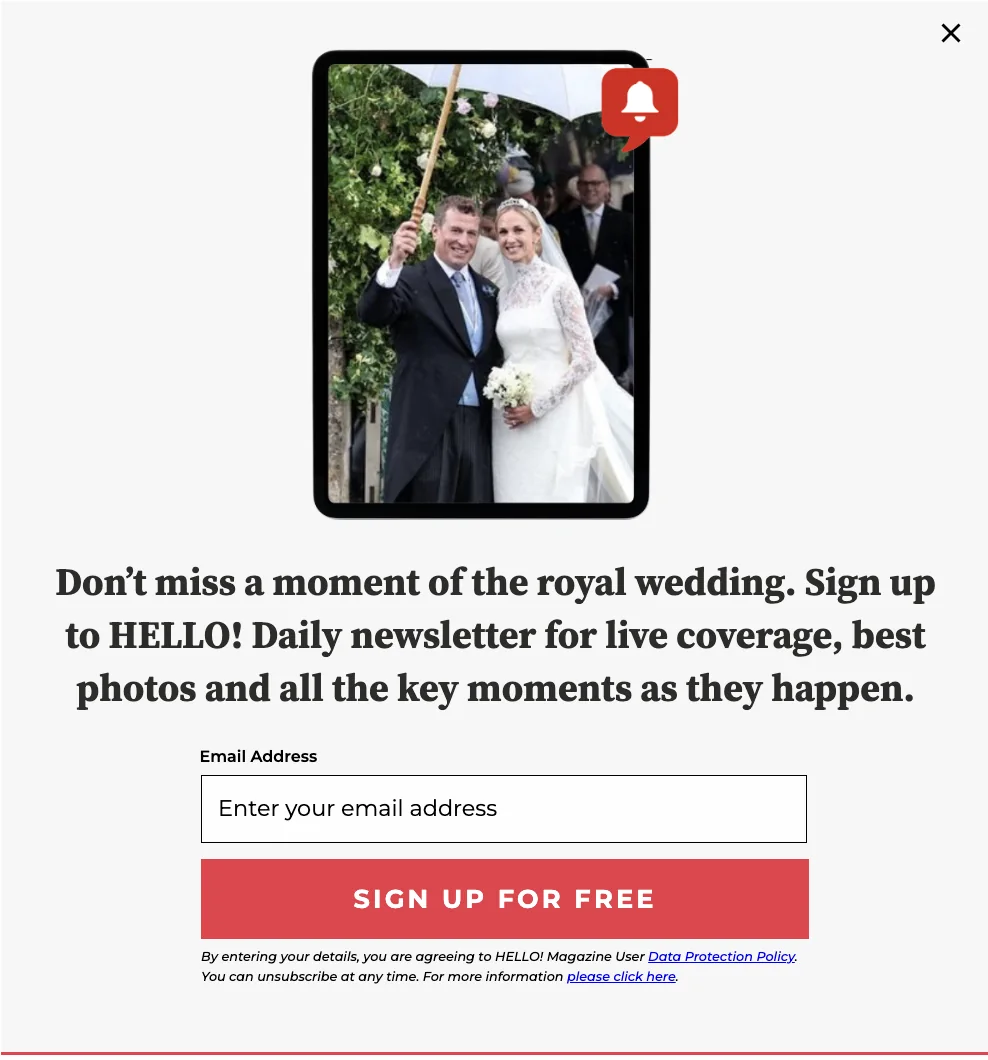
Pop-ups convert well, but only when they appear at the right time. Shown on a first visit, before the reader has read anything, they mostly get closed. Shown after several visits, or once a reader has finished an article, they become a natural next step.
With Poool, you can show a pop-up only after a number of visits, a scroll depth or a time on page, cap how often each reader sees it, and exclude readers who are already subscribed to the newsletter.
5. Onboarding: newsletters as a first habit
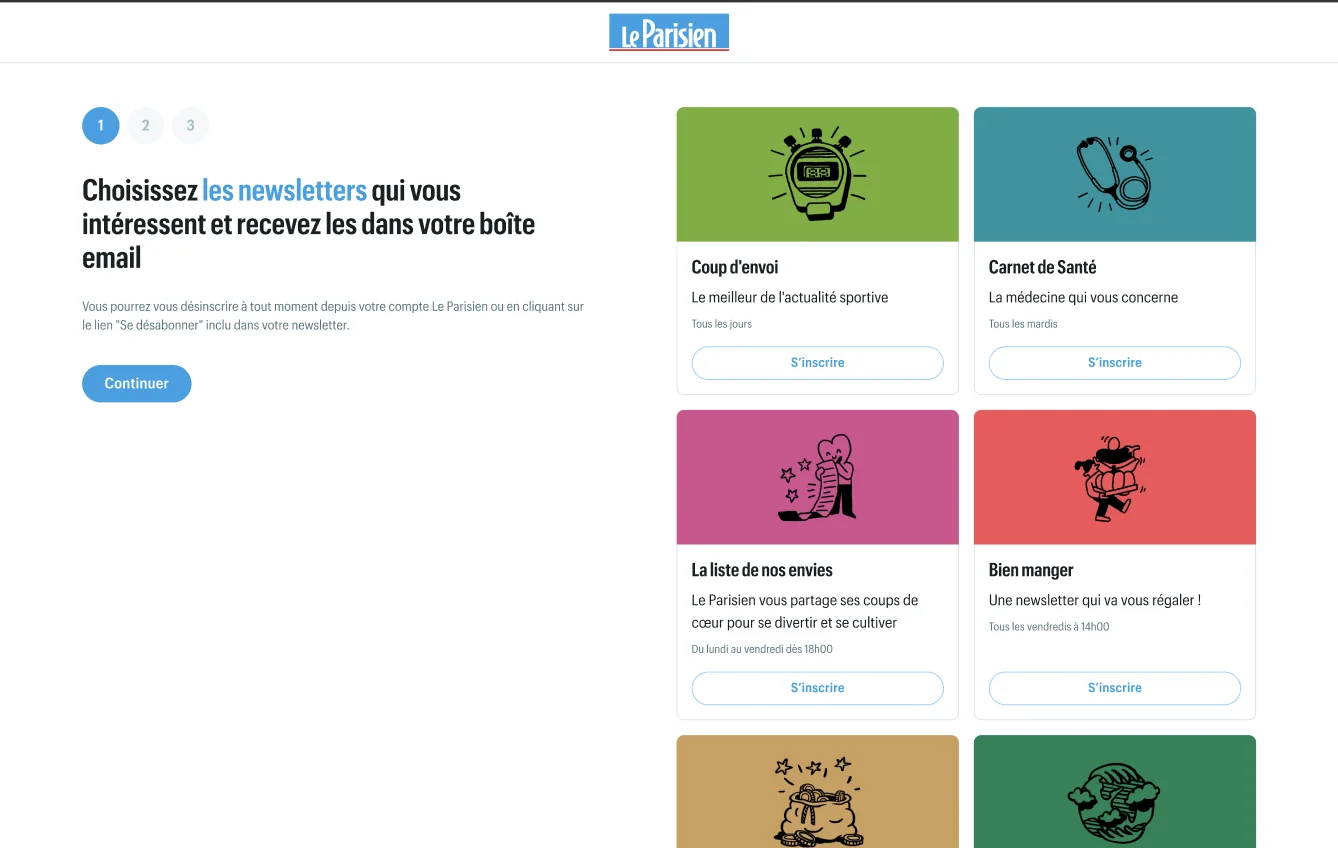
The first weeks after a reader registers or subscribes are when habits form. Like The Atlantic, make joining a newsletter one of the first actions you suggest. For subscribers, it's also the moment to highlight subscriber-only newsletters, as El País does.
With Poool, you can build onboarding journeys for new members and subscribers, across several steps and screens, on the web and in your app. Using Poool, Le Parisien reduced churn by 60% on new subscribers with a personalised onboarding.
Connected to your email tool
Poool doesn't send emails: your newsletters stay in your email tool. Poool sends events to it and can use its segments to target journeys, with native integrations such as Brevo, Braze, Actito, Selligent, Splio or Batch.
What publishers achieved with Poool
- Using Poool, Les Coops de l'information tripled their newsletter base in three months.
- Using Poool, Public Sénat multiplied its newsletter sign-up rate by 7.
- At Broadsheet, registered readers who also get the newsletter are 0.7% of the audience but drive 43% of subscription conversions.
Poool's MCP
Build your newsletter journeys in minutes
With Poool's MCP, you can build every one of these modules from your own AI assistant, in minutes and without a developer. Share a Figma file, a URL or a screenshot, ask for a newsletter sign-up, an onboarding flow or a pop-up, and it builds it based on what already works for publishers: 10 years of experience with 250+ publishers and Audiencers' analysis of 1,000+ more. Your team reviews, adjusts and decides what goes live.
Want to see what it would build for you? Book a demo to run your current newsletter journey through Poool's MCP.