
Step 4 of 5 · Onboarding
Onboarding new subscribers: how to keep the readers you've just won
Winning a subscriber takes months of work: the article that brought them in, the newsletter that brought them back, the paywall that finally convinced them. Then, too often, the journey stops at the payment confirmation. A thank-you page, a receipt by email, and the new subscriber is left to work out on their own what they've paid for.
Those first days and weeks are when a subscription is most fragile, and when the habits that keep readers subscribed for years are formed. This article looks at why onboarding matters so much, then at how to build an onboarding journey that turns new subscribers into loyal ones.
Why should you build an onboarding journey for new subscribers?
A big share of churn happens in the first weeks (15–20% within 24 hours, 34% of Financial Times churn within 90 days), habits formed in the first month predict who stays, and structured onboarding has lifted retention by 2–4 points at the Post and The Atlantic.
1. The first days and weeks are when you lose subscribers
- 15–20% of new news subscribers cancel within 24 hours, often because of unclear expectations or accidental sign-ups.
- 40% of new subscribers turn off auto-renew within 60 days, and 13% do it right after subscribing.
- Financial Times: 34% of churn happens in a subscriber's first 90 days.
2. Building a habit early is what predicts retention
- The Atlantic: subscribers who read on at least 4 separate days within 30 days tend to build a weekly habit. That habit strongly predicts they'll still be subscribed a year later.
- The Washington Post: subscribers with 0–2 visits have a 15% lower retention rate than those with more than 15 visits.
- Financial Times: trialists who sign up to a newsletter are 134% more likely to be retained.
- El País: subscribers who receive at least one subscriber-only newsletter churn 24% less.
3. Onboarding journeys produce measurable results
- The Atlantic: its onboarding lifted retention by 4 percentage points. It's built around a "First Best Action" in week one: visiting the site, downloading the app or joining a newsletter.
- The Washington Post: its personalised, behaviour-based onboarding emails lifted retention 2% and increased three-year customer lifetime value, measured against a control group after 12 weeks.
- Daily Maverick: it runs a 9-step onboarding journey for new members (newsletters, app, webinars) and says member retention is much better than subscription retention.
Building this with Poool
The publishers above share the same logic: reassure new subscribers straight away, guide them to the actions that build a habit, personalise what comes next, and keep going well beyond the first day. Here's how to put each step in place.
1. Start the moment they subscribe
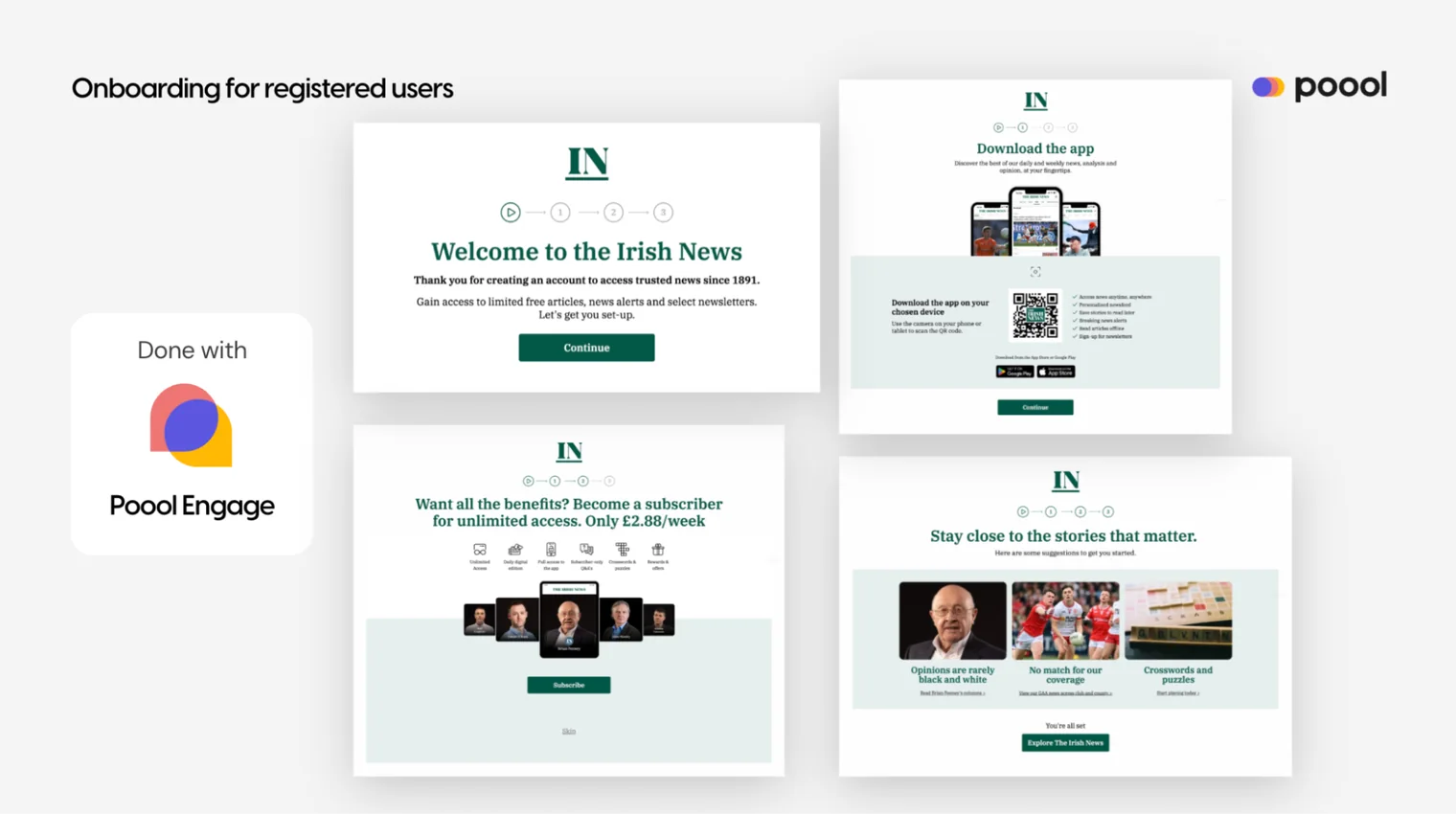
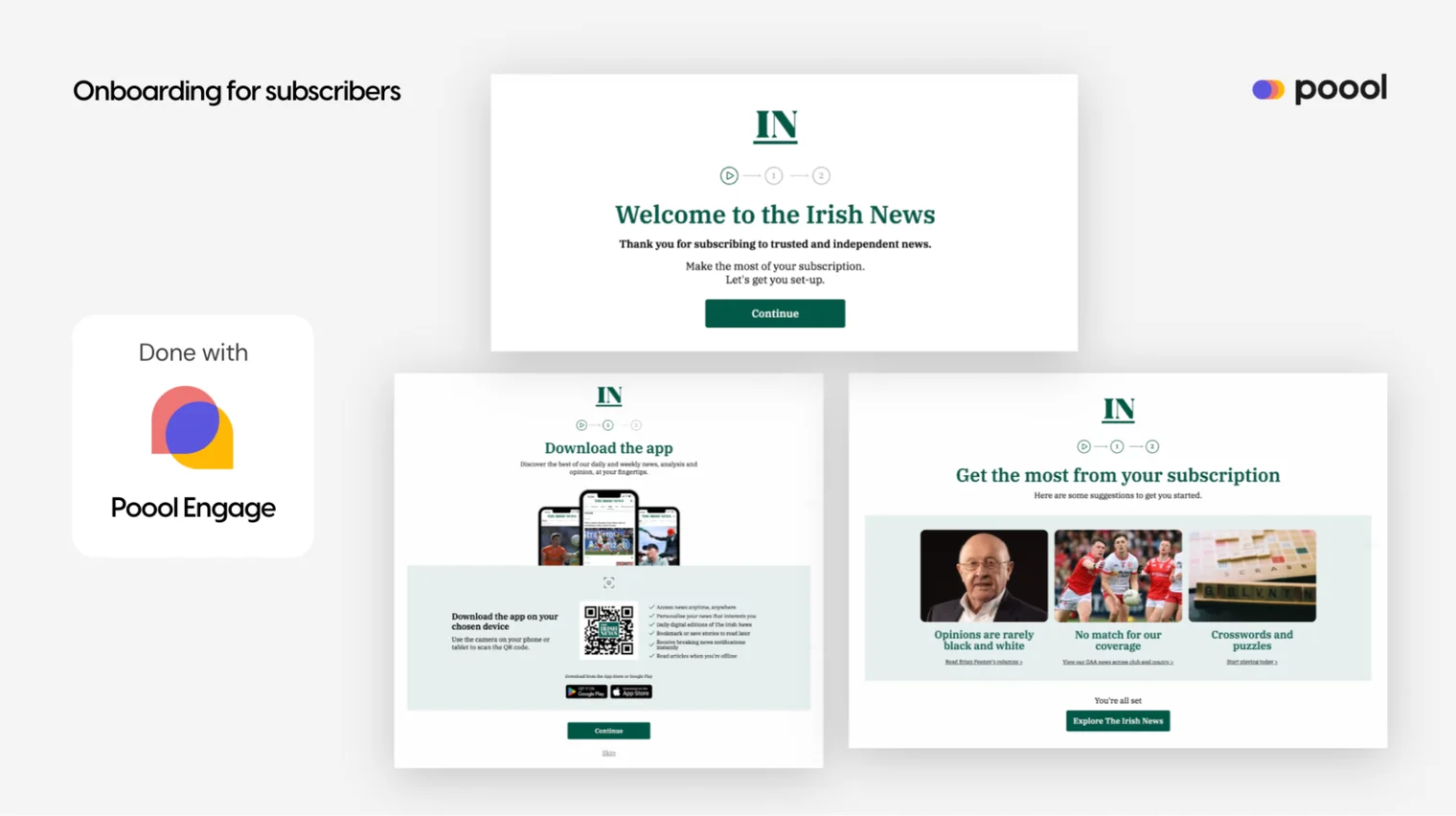
With up to a fifth of new subscribers cancelling within 24 hours, the screen they see right after paying matters more than any email that follows. Use it to confirm what they now have access to, how to log in on every device, and what to do first. A short welcome note from the editor-in-chief, as The Economist includes in its welcome pack, makes the subscription feel like joining something rather than paying for something.
With Poool, you can build onboarding journeys for new subscribers on the web and in your app, shown as soon as their status changes to member or subscriber, without waiting for a developer.
2. Guide them to a first best action
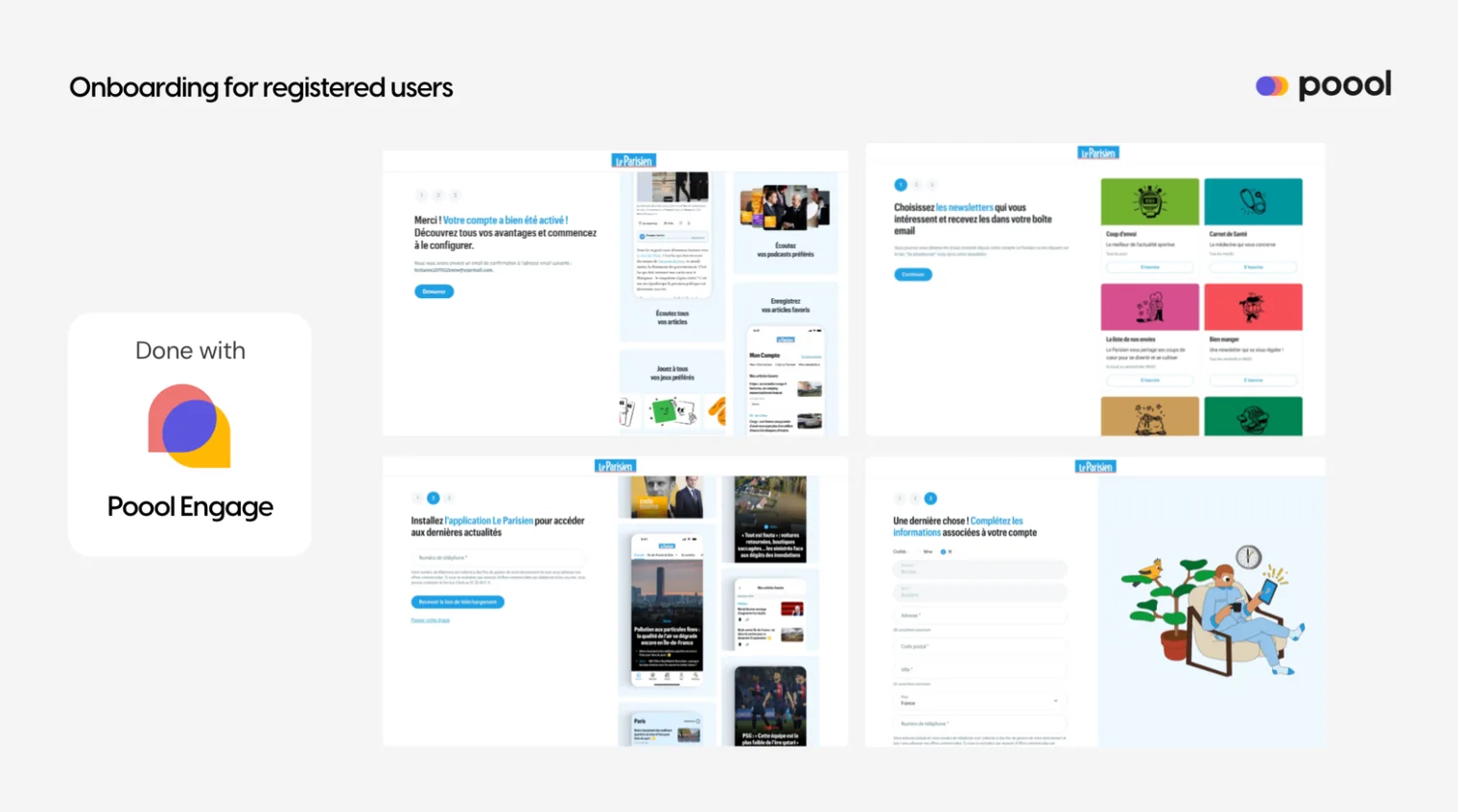
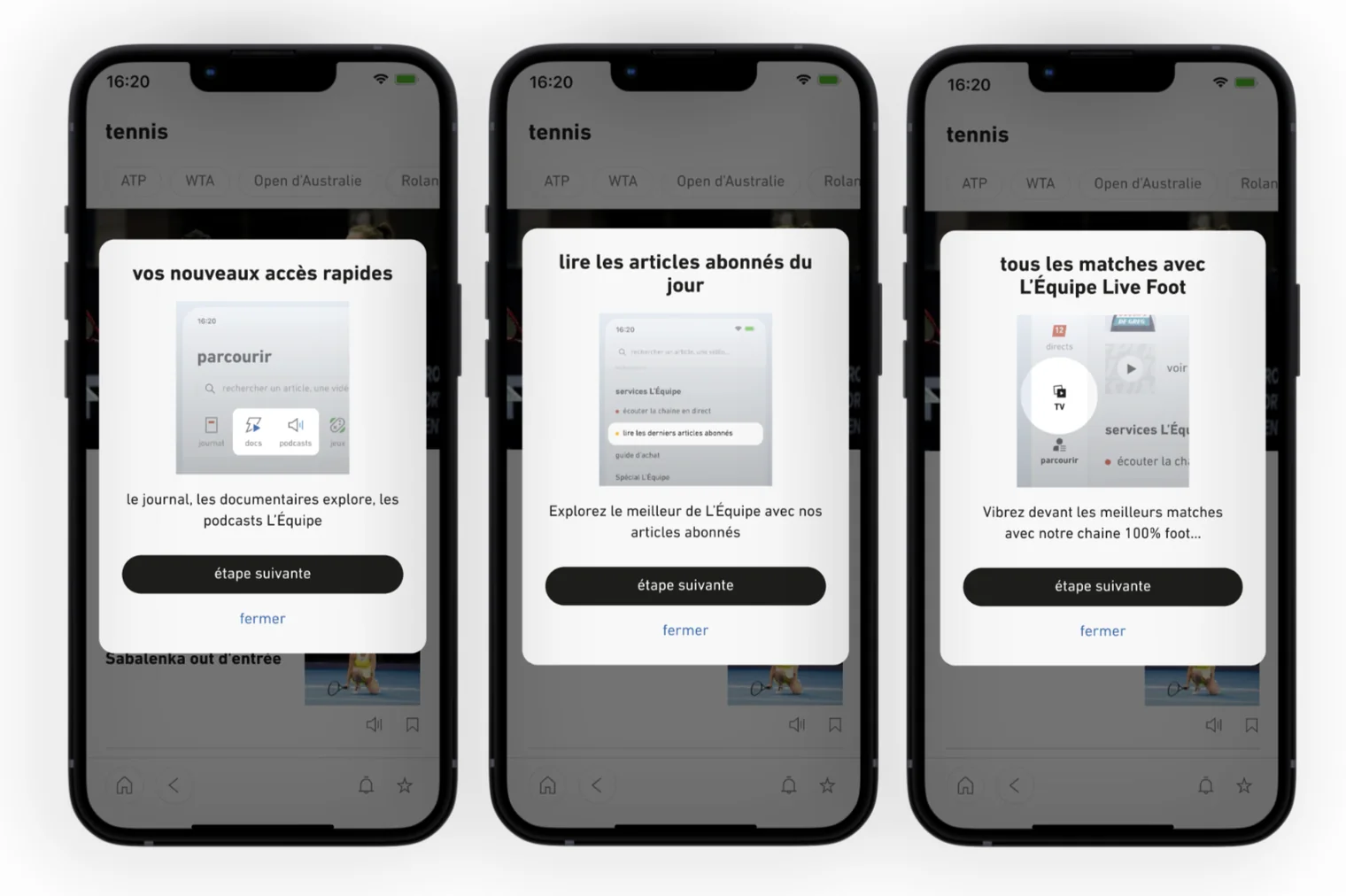
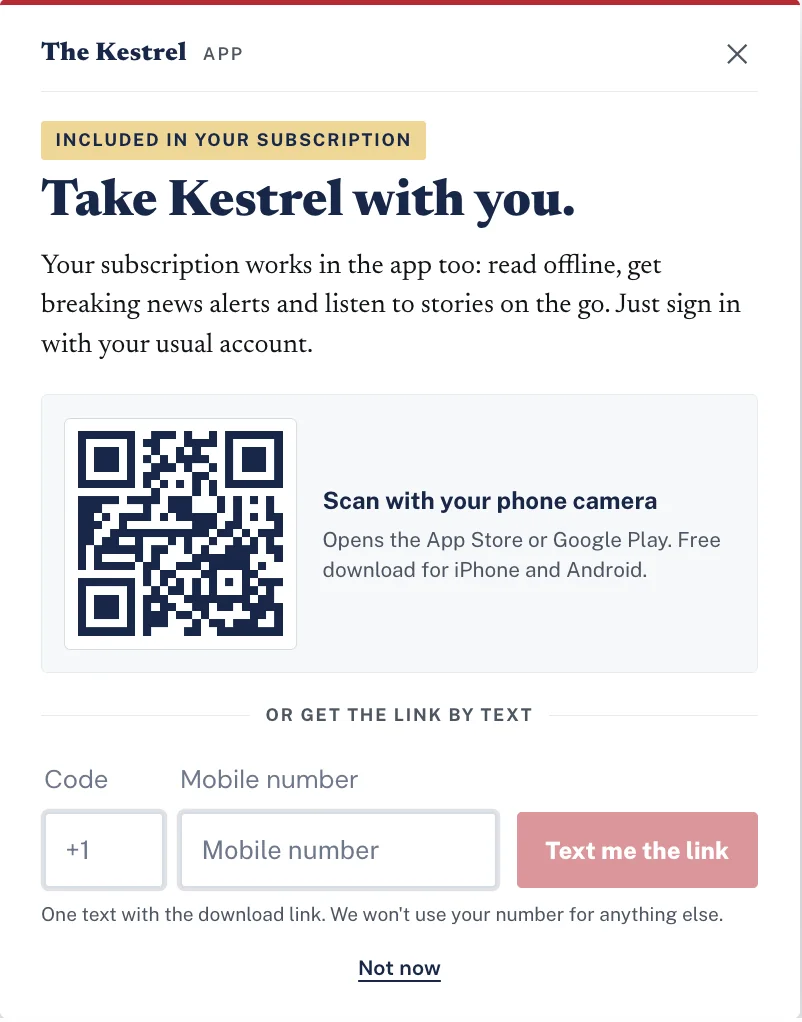
Don't ask new subscribers to do everything at once. Pick the two or three actions that best predict retention for your audience, usually joining a newsletter, downloading the app and choosing topics, and present them as short, skippable steps with a clear sense of progress ("step 2 of 3"). Most of the onboarding journeys in Audiencers' benchmark push the app; on desktop, a QR code is the quickest route to it, and on mobile, a store button.
With Poool, journeys can run over several steps and screens, and each step can adapt to the reader's device, so desktop readers see a QR code and mobile readers a store button. Using Poool, Le Parisien built a four-step on-site onboarding journey for new subscribers, whilst L'Équipe built a pop-up product tour.
3. Personalise from the first answer
One or two short questions about what the reader cares about (topics, the time they have, what they're looking for) are enough to make the rest of the journey relevant. The key is that every answer visibly changes what comes next: recommended newsletters, followed topics, the articles you suggest.
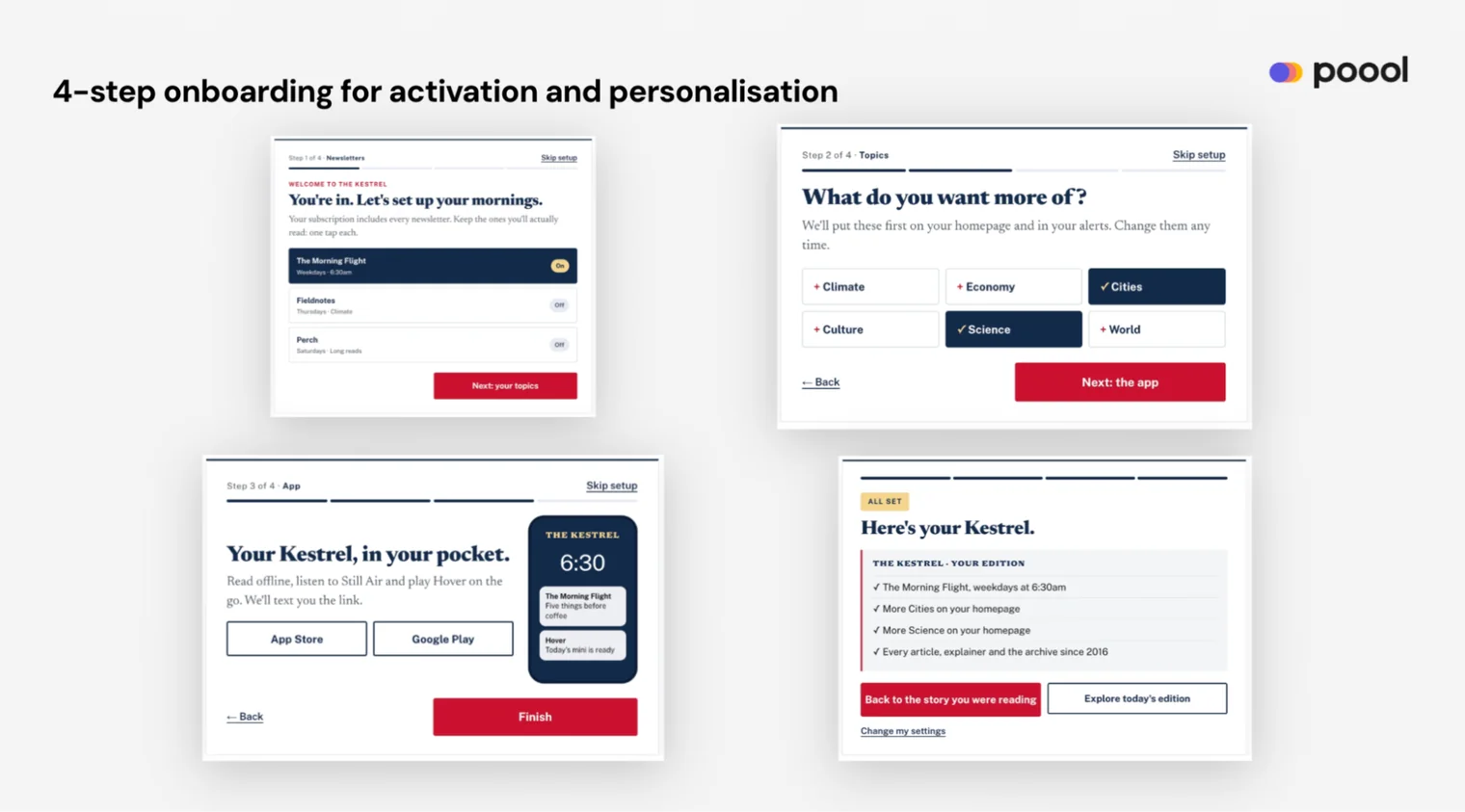
We built this journey with Poool for our fictional media, The Kestrel, where the final display screen is personalised based on the selections on previous steps.
4. Keep going over the first 100 days
Onboarding isn't a single screen. Bring back the steps a subscriber skipped: an app prompt for readers who haven't downloaded it, a newsletter suggestion for those who haven't signed up. And keep showing the value of the subscription, especially benefits they haven't used yet.
With Poool, you can target follow-up messages by reader status, number of visits or your own variables, and exclude subscribers who have already completed a step, so nobody is asked twice.

5. Spot new subscribers who are drifting away
A new subscriber who stops visiting in their first weeks is sending a signal long before they cancel. Give them a reason to come back: the best stories they've missed, a newsletter that matches what they read, a reminder of what their subscription includes.
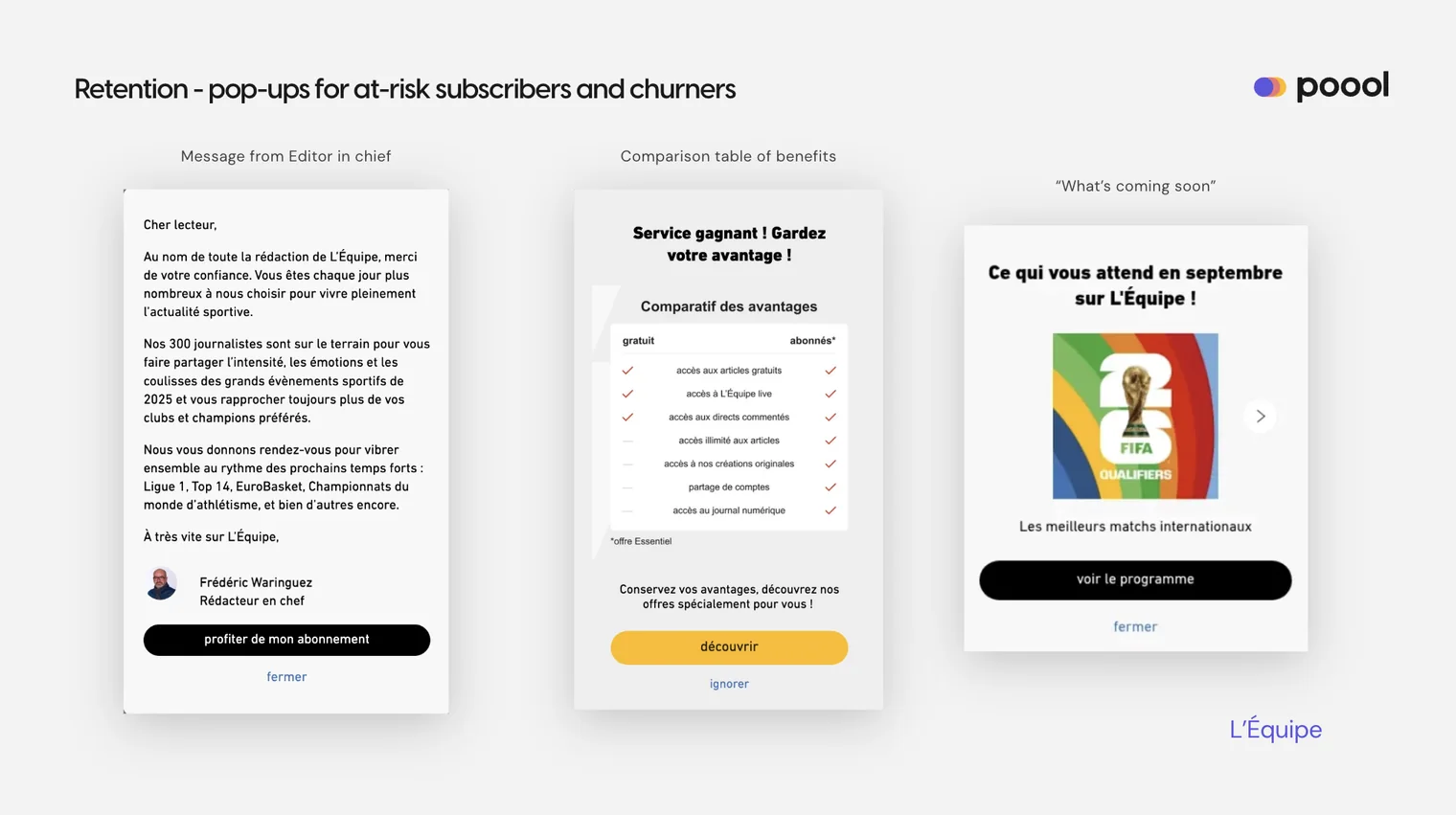
With Poool, you can build retention journeys aimed at subscribers whose engagement drops. At L'Équipe, subscribers who saw at least one Poool retention widget had 84% retention after two months, vs 63% for those who saw none.
What publishers achieved with Poool
- Using Poool, Le Parisien reduced churn by 60% on new subscribers with a personalised onboarding.
- At L'Équipe, subscribers who saw at least one Poool retention widget had 84% retention after two months, vs 63% for those who saw none.
- We use it ourselves: Audiencers' onboarding journeys for members and subscribers are built with Poool, through its MCP.
Poool's MCP
Build your onboarding journey in minutes
With Poool's MCP, you can build your onboarding journey from your own AI assistant, in minutes and without a developer. Share a Figma file, a URL or a screenshot, ask for an onboarding flow, and it builds it based on what already works for publishers: 10 years of experience with 250+ publishers and Audiencers' analysis of 1,000+ more. Your team reviews, adjusts and decides what goes live.
Want to see what it would build for you? Book a demo to run your current onboarding journey through Poool's MCP.